Sarah

Jul 082010
Mountain Lodges staff

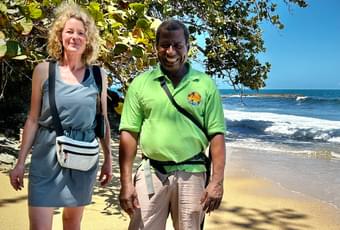
Staff at the Soraypampa Lodge

Before the lodges were built hardly anyone in the community had regular income.  The owners invited everyone from the communities they operate in to attend an open day. They interviewed everyone that came and those who wanted to work and showed the willingness to learn were offered work.

Very few of the their new recruits had formal training or education. Staff were appointed positions based on their natural abilities which were then developed by the owners. They sent them to a hospitality school and have implemented regular reviews and appraisals.

Each lodge has a female manager and this is seen as hugely important in the community.

Salaries are four times above the national minimum wage and everyone has a pension and health insurance.

Read more about our Machu Picchu Lodge Trek or about our Peru holidays more generally. For more general information about Peru holidays, read our guide to Peru.

Jul 072010
Wayra Lodge Salkantay Peru

The Wayra Lodge high in the Peruvian Andes above Machu Picchu

When someone decides to build a couple of lodges in the middle of remote, stunning mountain scenery near Machu Picchu then alarm bells will clearly ring for those of us who care about protecting these places.

Surely it would destroy the feeling of remoteness that makes the mountains so special.  Then there are environmental considerations –  the area has no electricity connection or running water.  It does make you wonder what sacrifices have been made to create these lodges?

It is reassuring to know that the lodges are owned and operated by a team genuinely passionate about the environment and the communities they work in.

Mountain Lodges of Peru is a Peruvian family business. The driving force behind the project is to eliminate poverty in the Salkantay region within 20 years.

With this aim in mind they set about building four lodges along the remote Salkantay trek to Machu Picchu.  It took ten long years of fighting Peruvian beuarocracy to get permission.

During that time the company was also the subject of a lot of local rumours – first that they were actually building a dam to create a water supply and then exploit the locals by selling it on at extortionate rates.

Then came the story that were in fact building a brothel.

And next, possibly the most pernicious rumour of all, was that the company was run by Chileans.  Chile and Peru have a long history of mutual dislike. The Peruvian owner was out on his horse one afternoon when he came across some locals who called him ‘The Chilean’. He was so incensed by this he jumped down from his horse and got out all the ID he had on him to prove otherwise.

So with this as a back story it is a real testament to the owners that they battled on.  The lodges are now a big part of the local community and fully accepted. The integration and social responsibility is probably the best I have seen anywhere in South America.

Read more about our lodge based hike to Machu Picchu.

Feb 222010
Antarctica Dream in the ice of Antarctica

Modern day Antarctic cruise

The Heroic Age of Antarctic Exploration is a term used to describe a 25-year period from late 1900’s to the mid 1920’s. Antarctica was the focus of virtually every expedition launched in this period. A bit like the Space Race in the 1950s and 60s.

The label ‘Heroic’ was bestowed on these explorers many years later as an acknowledgement of their achievements without any modern-day equipment or technology.

Without wanting to sound flippant or dismissive, modern-day explorers have the benefit of high-tech clothing and equipment such as satellite phones, GPS navigation and a back-up team following their progress usually ready to launch a rescue if things do not go as planned.

In the days of Scott, Amundsen and Shackleton there was none of this. They had boots and coats made of seal skin and sleeping bags made of reindeer skin. They relied on seals and other animals for food, a hand-held compass for direction, and each other for morale. There was no contact with the world once they left port in their wooden ships.

For me the story of Sir Ernest Shackleton’s Endurance expedition is probably the most amazing story of human endurance I have ever heard. It simply defies all logic that every single member of the crew survived. While in Antarctica I learnt more about the expedition from the books in the library on board and also the documentaries on the ship. I was left even more amazed at Shackleton’s ability to lead, make decisions and carry on and on and on in the most hostile environment on earth.

There have been quite a few expeditions which set out to follow in the footsteps of Shackleton but, personally, I think it should be left for us to read about and marvel as it is not something that can ever be relived by us today.

For those of you who are not familiar with the expedition here is a brief summary.

Aug 1914: After the Norwegian team led by Amundsen had won the race to the South Pole in 1911, Shackleton turned his attention to a new challenge. He and his team of 28 men set sail from Plymouth in Endurance with the intention of crossing the entire continent of Antarctica on foot from the Weddell to the Ross Sea. Most of this was unexplored territory.

Jan 1915: The team encounter an unusual amount of pack ice and Endurance becomes trapped in the Weddell Sea. They drift, trapped in the ice, for nine long months through the 24-hour darkness of the Austral winter in temperatures of minus 20 F.

Oct 1915: Shackleton orders the crew to abandon Endurance as she was getting crushed in the ice. They set up camp on the ice floe.

Nov 1915: Endurance sinks. The crew hope their ‘camp’ will drift towards Paulet Island about 250 miles away. They drift for 2 months before Shackleton decides to switch to a different ice floe.

Apr 1915: They are now about 60 miles from Elephant Island. Shackleton orders the men into the three 22 ft open lifeboats and they all row for five days in the roughest conditions imaginable.

On April 17th they reach Elephant Island and step foot on land for the first time in nearly 18 months.

Shackleton decides there is no hope of rescue from Elephant Island from passing ships and decides to head to South Georgia where he knows there is a whaling station. South Georgia is over 800 miles away. It’s the middle of May, the Polar winter, and the ocean just south of Cape Horn is known as the most ferocious in the world. Shackleton wants to attempt this journey in a small open 22ft boat.

He chooses five of his strongest men to accompany him and sets off on April 24th. They average around 60 or 70 miles a day in the most unimaginable conditions. Their sleeping bags, made from reindeer skin, become soaking wet in the storms and simply freeze. They row on and on. On May 8, just 14 days after leaving Elephant Island they catch glimpse of South Georgia. After 2 days of trying to land in treacherous conditions they finally make it. It was however the wrong side of the island. The whaling station is on the other side of the island across mountains and glaciers.

Two of Shackleton’s men were too weak to make the trek. So he set off with two others climbing over glaciers and crevasses. They had no sleeping bags or tents and they had to endure nearly 24-hour darkness and were guided by the full moon. They knew sleep would lead to death so they carried on. They reached the whaling station to the disbelief of the Norwegian whalers there. This is the conversation Mr Sorlie, the Norwegian whaler, recalls as they arrived:

Shackleton: Do you know me? My name is Ernest Shackleton. We have lost our ship, and come over the island.
Sorlie: Ernest Shackleton! My friend!
Shackleton:I am afraid that we smell a little.
Sorlie: This is a whaling station. We all smell a little.
Shackleton:We have been away so long. Tell us about the war. When did it end?
Sorlie: The war? The war, my friend, is not over. They’ve gone mad, Europe has gone mad. They’ve killed millions and millions of people. It’s a war like… no other war.
Frank Worsley: Who is winning?
Sorlie: Well, whoever is left alive at the end. Won’t you sit down, please? Please.
Shackleton: Mmm, thank you. .. I need to borrow a ship.

Now safe at the whaling station, Shackleton’s attention immediately turned to the rest of his crew back on Elephant Island. On his fourth attempt he finally rescues the rest of his crew in August 1916 in a boat loaned from the Chilean government.

Shackleton sums up his journey in his book ‘South’

‘We had pierced the veneer of outside things. We had suffered, starved and triumphed, grovelled down yet grasped at glory, grown bigger in the bigness of the whole. We had seen God in His splendours, heard the text that nature renders. We had reached the naked soul of man’

He died in January 1922 on his fourth expedition to the Antarctic and is buried on South Georgia Island.

Read more in our guide to Antarctica or have a look at our holidays to Antarctica.